1. The Golden Rule: Clean Hands and Soft Cloths
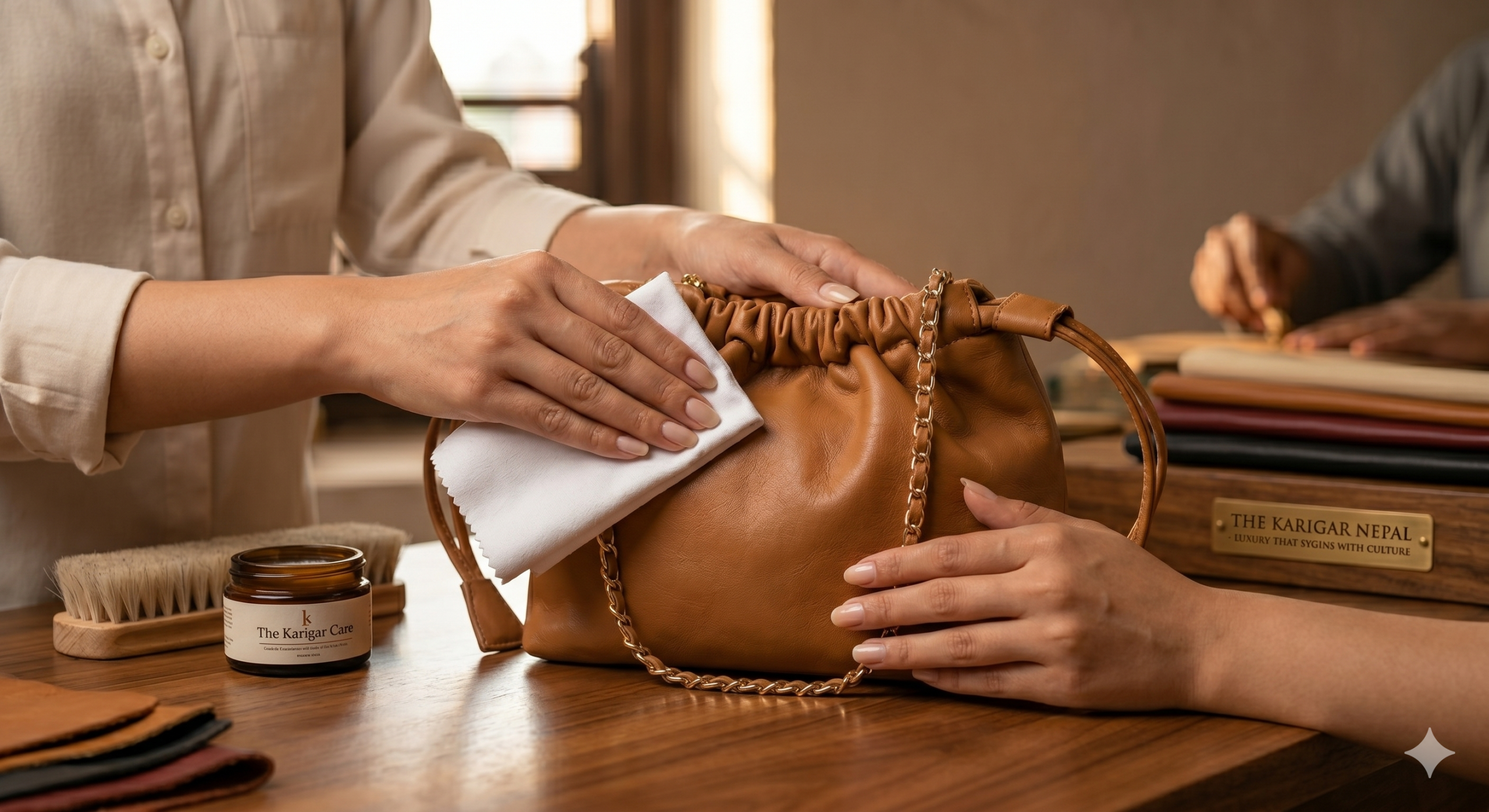
Leather is porous and can easily absorb oils and dirt from your skin.
-
The Daily Wipe: At the end of each week, use a dry, soft microfiber cloth to gently buff the exterior of your bag. This removes surface dust before it can settle into the grain.
-
The Deep Clean: For minor grime, slightly dampen a cloth with filtered water (ensure it is not dripping wet). Wipe in a light, circular motion. Never use wet wipes, dish soap, or harsh detergents, as these strip the natural oils that keep the leather supple.
Karigar Tip: Always “Spot Test” any cleaning method on a hidden area, like the bottom or inside the handle, before applying it to the whole bag.
2. Conditioning: “Skincare” for Your Leather
Think of leather conditioner as a moisturizer for your bag. Without it, leather can dry out, lose its flexibility, and eventually crack—especially in the varying climate of Nepal.
-
Frequency: Condition your bag every 4–6 months. If you live in a particularly dry area or use the bag daily, every 3 months is ideal.
-
The Process: Apply a pea-sized amount of a high-quality leather cream (like Leather Honey or a natural beeswax-based balm) to a clean cloth. Massage it into the leather evenly.
-
The Finish: Let it sit for 15 minutes to absorb, then buff away any excess with a dry cloth to reveal a rich, healthy glow.
3. Shape is Everything: How to Store Your Bag
A common mistake is hanging a heavy leather bag by its straps for long periods. This can permanently stretch the handles and distort the silhouette of structured pieces like the Liora.
The Proper Storage Ritual:
- Empty It: Remove heavy items to prevent the leather from sagging.
- Stuff It: Lightly fill the interior with acid-free tissue paper or a soft cotton cloth to maintain its “Modern Form.” Avoid newspapers, as the ink can transfer to the lining.
- The Dust Bag: Always store your bag in the breathable cotton dust bag provided by The Karigar Nepal. Never use plastic bags, which trap moisture and can lead to mold or mildew.
- Stand it Up: Place your bags upright on a shelf in a cool, dry place away from direct sunlight, which can fade the vibrant dyes of your Ruby Red or Sky Blue pieces.
4. Damage Control: What to do when the unexpected happens
Scenario A: The Rainstorm
Leather is naturally water-resistant but not waterproof. If you get caught in a downpour:
-
DO: Blot the water away immediately with a dry towel. Let it air dry naturally in a well-ventilated room.
-
DON’T: Never use a hairdryer or place it near a heater. Forced heat will cause the leather to shrink and become brittle.
Scenario B: The Grease Stain
If you drop food or oil on your bag:
-
The Fix: Sprinkle a small amount of cornstarch or talcum powder on the spot. Let it sit overnight to “pull” the oil out. Gently brush it off in the morning with a soft-bristled brush.
Scenario C: Scuffs and Scratches
For full-grain leather, minor surface scratches can often be “healed” simply by rubbing them with the warmth of your clean fingertips. The natural oils in your skin help blend the scratch back into the leather’s patina.
Summary Checklist for Karigar Owners
| Task | Frequency | Why it Matters |
| Dry Dusting | Weekly | Prevents dirt buildup in the leather grain. |
| Conditioning | Every 4-6 Months | Keeps the leather supple and prevents cracking. |
| Stuffing & Storing | When not in use | Maintains the architectural structure of the bag. |
| Professional Check | Yearly | For deep stains or hardware polishing. |
Luxury that lasts
By following these steps, you aren’t just cleaning a bag—you are preserving a piece of Nepali craftsmanship. A Karigar bag is designed to be a “Modern Heritage” piece, and with the right care, it will be a faithful companion for decades to come.